Car Won't Start and Just Clicks? Here's Why in Havre, MT
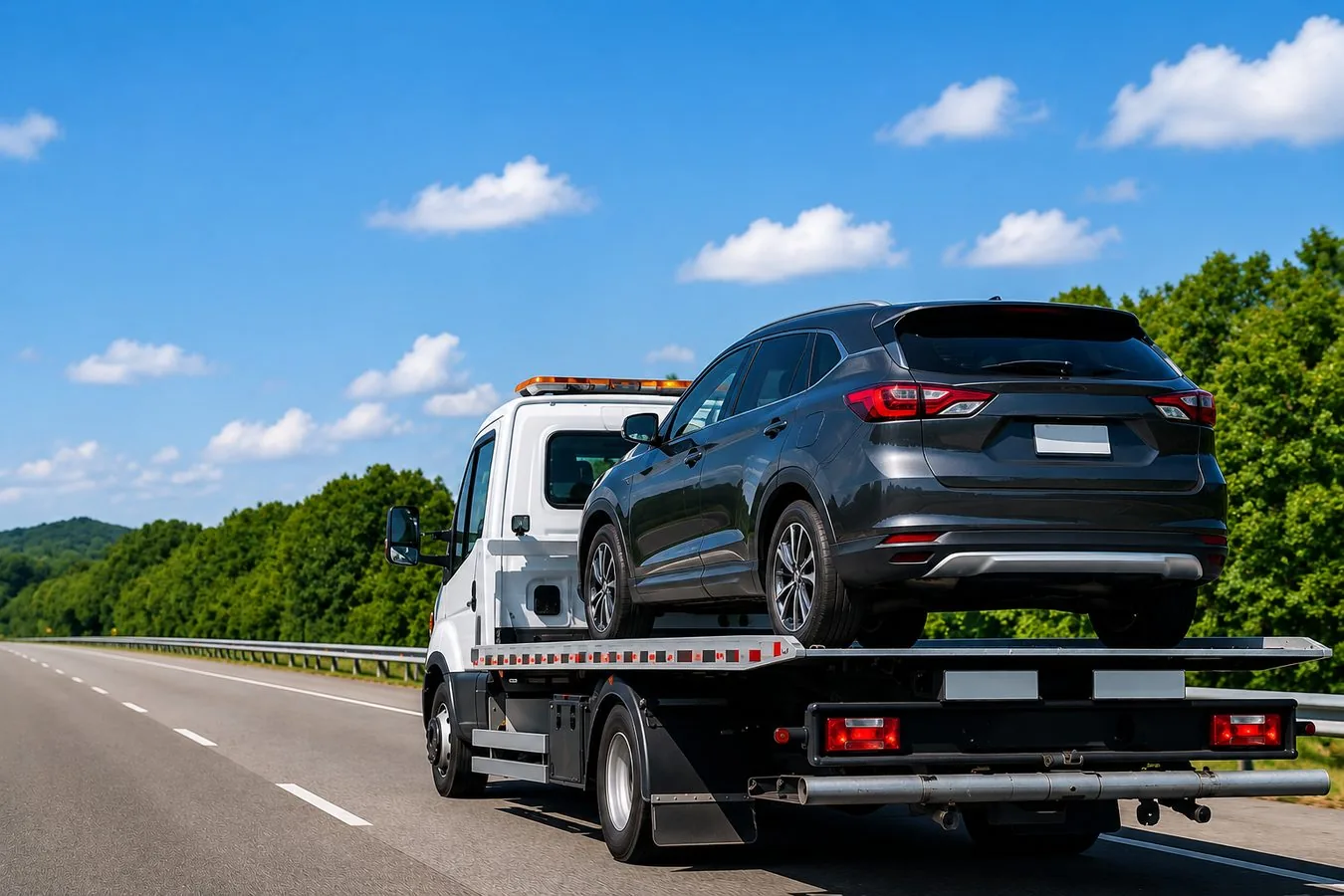
You turn the key, and instead of the engine roaring to life you hear it: click-click-click-click, or maybe just one dull clunk. The dash lights may flicker, the radio might cut out, and the car simply refuses to start. It is one of the most common — and most frustrating — problems drivers face here in Havre, especially when the Hi-Line wind is howling and you are already running late.
The good news is that clicking almost always points to a small handful of causes, and most of them are quick to diagnose and fix. This guide walks through what that clicking actually means, what you can safely try yourself in a Havre parking lot, and when it makes sense to call for a jump start or a tow. We serve drivers across Havre, Chinook, Harlem, Box Elder, and the rest of Hill County 24/7, so we have seen every version of this problem — from a dead battery outside MSU-Northern to a failed starter on US-87.
What the Clicking Noise Is Actually Telling You
When you turn the key to start, your battery is supposed to send a big surge of power to the starter motor, which spins the engine over. That clicking sound is the starter solenoid trying to engage — but not getting enough juice to do its full job. In plain terms: something is starving the starter of power, and the noise is the mechanical equivalent of a cough.
The pattern of the click is the single best clue you have:
- Rapid clicking (click-click-click-click): Almost always a weak or dead battery. There is just enough power to pulse the solenoid, but not enough to hold the starter engaged.
- One single loud click: Often a failing starter motor or solenoid, or a battery that is very low. The solenoid engages once but the motor cannot turn.
- No click at all, no crank: A completely dead battery, a corroded connection, a blown fusible link, or an ignition switch problem.
Knowing which of these you are hearing turns a mystery into a short checklist. And in a place like Havre, where a cold snap can knock a marginal battery flat overnight, the battery is the prime suspect more often than not.
The Most Common Cause in Havre: A Weak or Dead Battery
Car batteries hate temperature extremes, and Havre delivers both. Long, deep-cold winters near the Bear Paw Mountains drain a battery's cranking power, while summer heat quietly cooks the internal plates and shortens its life. Most batteries last three to five years, and if yours is on the older end, a single frigid night by the Milk River can be enough to finish it off.
Here is what makes a battery the likely culprit:
- The clicking is rapid rather than a single clunk.
- Your headlights and dash lights are dim, or they dim further when you try to start.
- The car struggled to start recently — slow, labored cranking before it finally caught.
- You left a dome light, headlight, or accessory on, or the car sat unused for a week or more.
- The battery is more than three years old.
If several of those ring true, a jump start is your fastest path back on the road. When you jump the car and it starts right up, you have your answer — the battery was the weak link. From there you want to either drive long enough to recharge it or have it tested and replaced before it strands you again on a colder day.
When It Is the Starter, Not the Battery
If your battery is healthy — lights bright, recently tested, only a couple of years old — and you get a single loud click with no crank, the starter motor or its solenoid is the next suspect. Starters wear out over time, and they can fail intermittently before they quit for good. A classic sign is a car that starts fine most days but occasionally gives you one click, then fires up normally on the next try.
An old backyard trick is to gently tap the starter with a wrench while someone turns the key; sometimes that jars the worn contacts into working one last time. It is a temporary band-aid, not a fix, and it is not something we recommend attempting on the shoulder of US-2 with traffic going by. If the starter is failing, the car needs a tow to a shop — a jump start will not solve a mechanical starter problem, because the issue is not the power, it is the motor itself.
Corroded or Loose Battery Connections
Before you assume the worst, look at the battery terminals. Montana's road salt, moisture, and temperature swings all encourage corrosion — that fuzzy white, green, or blue crust on the battery posts. Corrosion acts like a roadblock for electricity: the battery may be fully charged, but the power cannot flow cleanly to the starter, and you get clicking or nothing at all.
Pop the hood and check that both battery cables are snug and clean. If you can wiggle a terminal by hand, it is too loose. Light corrosion can be cleaned with a wire brush and a paste of baking soda and water once the car is off — but if you are not comfortable working around the battery, or the buildup is heavy, leave it to a pro. A loose or corroded connection is one of the cheapest fixes there is, and it is worth ruling out before you replace parts you do not need.
What to Safely Try Yourself in Havre
If you are in a safe spot — a parking lot, your driveway, well off the roadway — here is a sensible order of operations:
- Turn off every accessory. Kill the heater, radio, and lights so all available power goes to starting.
- Check the shifter. An automatic must be fully in Park; a manual needs the clutch pressed. A car that only clicks can sometimes be a neutral-safety switch fooled by a shifter that is a hair out of position.
- Try a firm turn of the key once or twice — no more. Repeated grinding damages the starter.
- Inspect the terminals for looseness or corrosion, as above.
- Attempt a jump start if you have cables and a helper, following your owner's manual and safe jump-starting guidance from AAA. Connect positive to positive, negative to a clean metal ground on the dead car — never to the negative post of a dead battery.
If the jump works, you likely have a battery or charging issue to address soon. If you still get nothing but clicking, stop there. Continuing to crank will not help, and you are better off getting a tow than draining what little you have left.
When to Call for a Tow Instead of a Jump
A jump start is the right call for a plain dead battery. But some situations need a flatbed or a wheel-lift, not jumper cables. Call for a tow when:
- The car still only clicks after a good jump — the problem is mechanical, likely the starter.
- You smell burning, see smoke, or notice fluid under the car.
- The battery is visibly swollen, leaking, or cracked.
- You are stranded somewhere unsafe — a narrow shoulder on the Hi-Line, an icy stretch near Fresno Reservoir, or a spot with no room to work.
- The engine cranks but simply will not fire, which points beyond the battery entirely.
Our trucks are DOT compliant and our operators are licensed and insured, so whether you need a quick jump in a Havre lot or a flatbed ride to your mechanic in town, you are covered. We keep response times in the 30 to 45 minute range across Havre and the surrounding Hill County communities, and we run around the clock — because dead batteries and bad starters do not keep business hours.
Clicking but Won't Start? We'll Get You Going.
24/7 jump starts, battery service, and towing across Havre & Hill County. Fast, licensed, and insured.
Call (615) 241-0232Frequently Asked Questions
Does a clicking car always mean the battery is dead?
Usually, but not always. A rapid clicking almost always points to a weak or dead battery that can't spin the starter. A single loud click can mean a failed starter motor or solenoid, and a no-click, no-crank situation may be a corroded connection or bad ignition switch. A jump start tells you fast: if it fires up, the battery was the problem; if it still only clicks, the starter is the likely culprit.
How fast can Havre Towing reach me for a jump start?
We aim for 30 to 45 minutes anywhere in Havre and across Hill County, including Chinook, Harlem, Box Elder, and the US-2 Hi-Line corridor. We run 24/7, so a dead battery at 2 a.m. in a Havre parking lot gets the same quick, licensed and insured response as a midday call.
When was the last time you had your battery tested — before winter, or not since you bought the car?